- Herbspace
- Thu,09 2026
Why Self-Care Feels Selfish — And Why Caring for Yourself Isn't Vanity
When did taking care of yourself become something you had to justify?
- A quiet morning.
- A long shower.
- Going to bed early.
- Taking care of your skin.
- Saying no to another commitment.
- Taking ten minutes without doing anything productive.
Somehow, many of these things started feeling like luxuries.
Things we should earn.
Things we should do only after everything else is taken care of.
But there is a problem with that idea:
You are part of the "everything else" that needs taking care of.
Why Does Self-Care Feel Selfish?
For many of us, being useful has become closely tied to being valuable.
- We work.
- We provide.
- We respond.
- We solve.
- We care for other people.
And when there is finally a little time left, we are expected to use it efficiently.
So when we choose ourselves instead, even briefly, it can feel uncomfortable.
You might think:
"I should be doing something else."
"I don't have time for this."
"There's so much more I need to finish."
"I'll do it when everything is done."
But everything is rarely done.
There is always another email.
Another responsibility.
Another person who needs something.
And if self-care is always postponed until nothing else needs you, it may never happen.
Self-Care Isn't the Same as Indulgence
The word "self-care" has sometimes been reduced to candles, expensive products and occasional treats.
But care is much bigger than that.
The World Health Organization describes self-care broadly as the ability to promote and maintain health and wellbeing and cope with life's challenges, with or without support from a health professional. It includes everyday areas such as hygiene, nutrition, lifestyle and other health-related choices.
In other words, caring for yourself isn't inherently indulgent.
It is part of being responsible for your wellbeing.
There is a difference between:
"I need to look better."
and
"I want to take care of myself."
One is about fixing.
The other is about tending.
You Don't Have to Improve Yourself Every Day
We've become very comfortable with the language of improvement.
Better skin.
Better body.
Better productivity.
Better habits.
Better version of yourself.
Even self-care can become another project.
Another checklist.
Another thing to get right.
But perhaps care doesn't always need an outcome.
Maybe sometimes you can wash your face without thinking about whether it will make you look younger.
Maybe you can apply face oil simply because the ritual feels good.
Maybe you can take a walk without counting the steps.
Maybe you can rest without calling it recovery.
Not everything has to produce something.
Some things can simply nourish you.
Care Is Not a Reward
This may be the most important shift:
You don't have to finish everything before you deserve care.
You don't have to have a productive day.
You don't have to accomplish your goals.
You don't have to be exhausted.
You don't have to be useful to someone else.
You don't have to earn ten quiet minutes.
Care isn't a prize at the end of a successful day.
It can be part of the day itself.
What Does Nourishment Look Like?
Nourishment doesn't have to be complicated.
It might look like:
- Drinking water before you realise you're thirsty.
- Eating a proper meal instead of rushing through one.
- Going to bed when you're tired.
- Taking a few minutes away from your phone.
- Spending time outside.
- Moving your body gently.
- Saying no when your capacity is full.
- Creating a simple evening skincare ritual.
- Giving yourself a few uninterrupted minutes of quiet.
None of these need to be dramatic.
In fact, the most sustainable forms of care are often remarkably ordinary.
Create a Ritual, Not Another Task
One reason rituals work differently from routines is that they invite attention.
A routine says: Get this done.
A ritual says: Be here for this.
That difference matters.
A simple skincare ritual, for example, doesn't have to be about achieving perfect skin.
It can be a transition.
The day ends.
The phone goes away.
The face is cleansed.
A few drops of face oil.
A slow massage.
A breath.
A moment in which you are not working, answering, solving or performing.
Just being cared for.
That is nourishment.
The Question to Ask Instead
Instead of asking:
"Do I have time for myself?"
try asking:
"What would help me feel cared for today?"
The answer might be five minutes.
It might be sleep.
It might be food.
It might be movement.
It might be silence.
It might be saying no.
And sometimes it might be nothing more than standing in front of the mirror and taking a breath.
The answer doesn't have to be impressive.
It just has to be honest.
Things We Forgot
We forgot that caring for ourselves isn't vanity.
We forgot that nourishment doesn't have to be visible.
We forgot that self-care doesn't need an audience.
We forgot that we don't have to become a better version of ourselves before we are worthy of care.
Perhaps the goal isn't always to improve.
Sometimes, the goal is simply to tend to what already exists.
You.
Things We Forgot #6
Caring for yourself was never vanity.
It was always care.
Featured
-
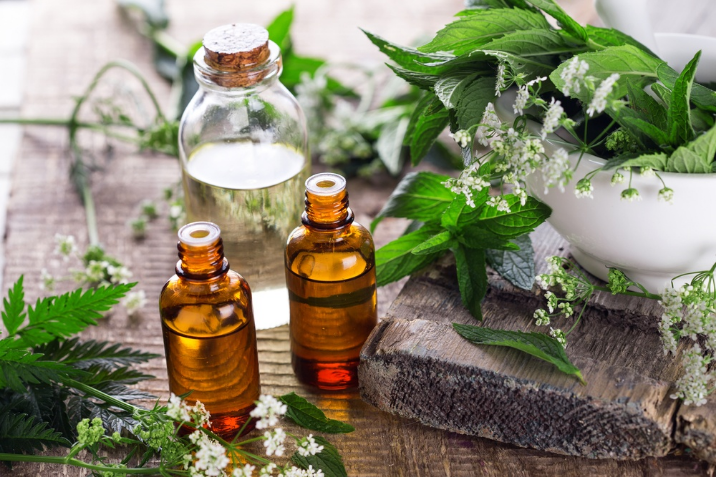
Add a few drops of your favorite essential oil into your Shampoo or face wash and enjoy the benefits of aromatherapy” Easy peachy right? Well, not really!!! Before you roll your eyes and go “What are you talking
Read More... -

Add a few drops of your favorite essential oil into your Shampoo or face wash and enjoy the benefits of aromatherapy” Easy peasy right? Well, not really!!! Before you roll your eyes and go “What are you talking
Read More... -

In this blog series, we will learn all the important aspects related to essential oils. Let's start with what essential oil, concrete, resinoid, and absolute
Read More... -
Over the past few years, the market for essential oils has significantly grown. And, they are going to be the next big thing in the future. Essential oils undoubtedly have some unbeatable therapeutic properties that
Read More...